Category: Uncategorized

  • The wildest games on earth

    The wildest games on earth

    The World Nomad Games bring traditional equestrian sports, wrestling, archery and nomadic culture together in one extraordinary international competition.

    Kok-boru

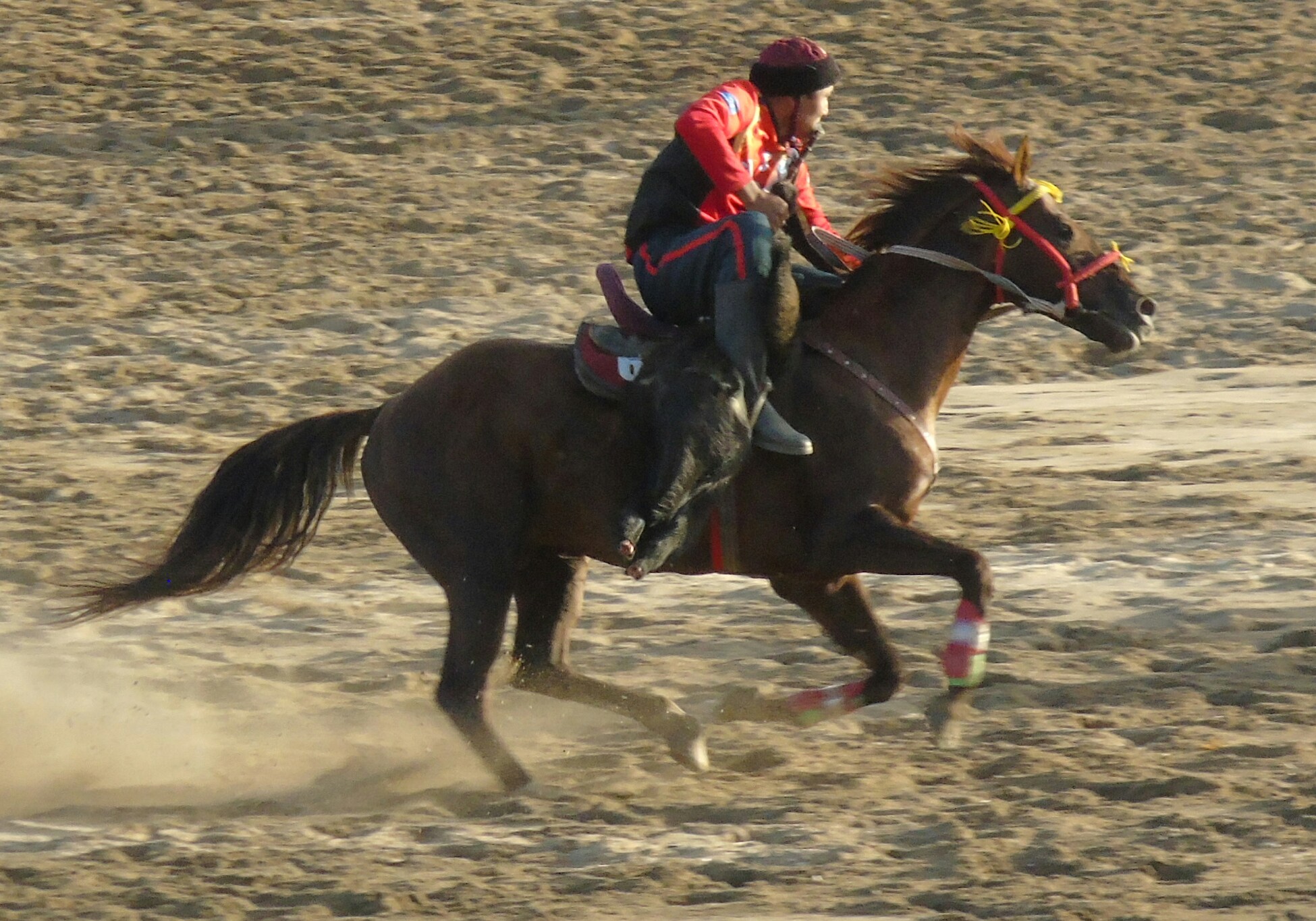
    The event that stops first-time visitors in their tracks is kok-boru. Teams of riders thunder across an arena wrestling for possession of a goat carcass and trying to carry it to the opposing goal.

    There is dust everywhere. Horses collide shoulder to shoulder. Riders hang almost horizontally from their saddles to scoop the carcass from the ground, then accelerate away with opponents trying to tear it from their grip.

    Calling it polo with a goat gets the mechanics across. It does not remotely convey the spectacle.

    The SideQuest

    The Games began in Kyrgyzstan in 2014 as an international celebration of the sports and culture of traditionally nomadic peoples. For the classic setting, it is hard to beat Cholpon-Ata on Lake Issyk-Kul, beneath the Tian Shan mountains.

    Go for the spectacle. Stay long enough and the stranger discovery is that everybody around you stopped thinking it was strange long before you arrived.

  • The fire at the end of the road

    The fire at the end of the road

    For decades, the best time to arrive at Darvaza was just before sunset.

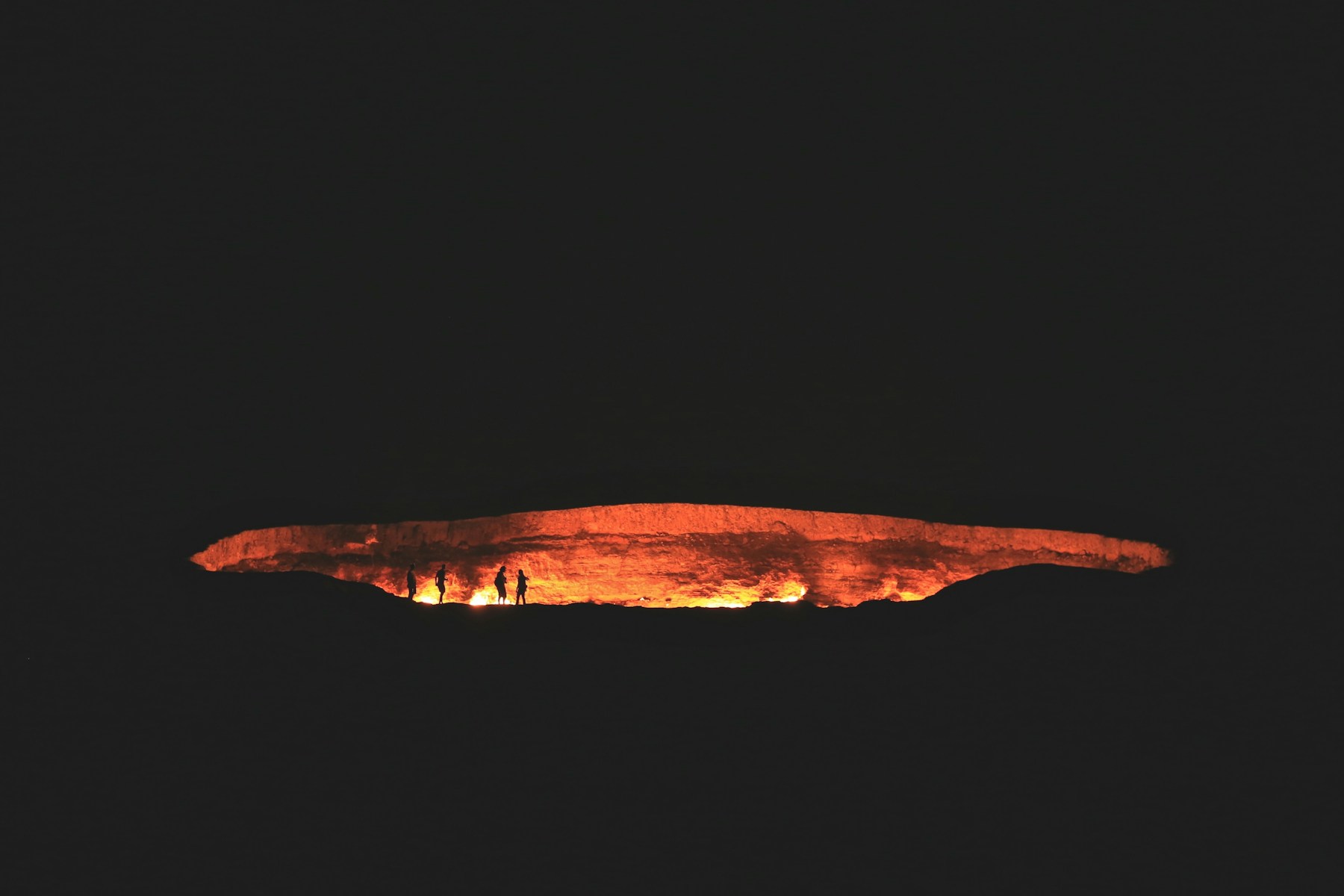
    In daylight it was an ugly hole in the Karakum Desert. Then the sun went down and the earth turned orange.

    Hundreds of flames burned across a crater roughly 60 metres wide, fed by natural gas leaking from beneath the desert. The heat reached the rim. The glow could once be seen from kilometres away.

    Somebody inevitably named it the Gates of Hell.

    The surprise in 2026 is that hell is apparently being turned down.

    Turkmen authorities have been diverting gas into nearby wells as part of efforts to reduce methane emissions. State energy officials say the intensity of the burning has fallen by roughly three times since 2023. Where the crater once blazed across much of its floor, recent accounts describe smaller pockets of flame.

    Darvaza is still burning.

    But for the first time in decades, travelling there comes with a strange new question: how much longer will it?

    A very Soviet mystery

    The famous origin story is irresistible. Soviet geologists drilling for gas in 1971 supposedly broke into an underground cavern. The ground collapsed beneath their rig. Gas began escaping. Engineers set it alight, expecting the fuel to burn out in a few weeks.

    Fifty years later, tourists were still standing around it.

    There is only one problem. The history is murkier than the legend.

    Records are incomplete and competing accounts put the crater’s formation in the 1960s and its ignition later. Even recent sources disagree on the exact year. What is certain is simpler: a drilling-related collapse exposed natural gas, somebody lit it, and an industrial accident became one of Central Asia’s strangest tourist attractions.

    For years the remoteness did half the work. Darvaza sits in the Karakum, hundreds of kilometres from Ashgabat, surrounded by an enormous desert and reached overland rather than by strolling from a hotel lobby.

    The SideQuest

    Turkmenistan makes you earn this one before you even reach the sand.

    Tourists generally need a visa supported by a Letter of Invitation arranged through a travel agency. The country’s own embassy guidance directs tourist applicants to an agency for that paperwork. In practice, that makes Darvaza a guided expedition rather than a spontaneous road trip.

    Current operators run trips from Ashgabat and from the Uzbek border, usually in four-wheel-drive vehicles. The best versions stay overnight near the crater in a tent or yurt.

    That is still the way to do it.

    Arrive in daylight and the place can seem almost disappointing: bare desert, a scar in the ground, scattered infrastructure. Wait.

    As the sky darkens, the remaining flames sharpen. Heat shimmers above the pit. The desert around it disappears. There are few experiences quite like standing in darkness while the ground itself burns.

    Then walk away from the rim, eat dinner in the desert and come back later when everyone has stopped taking photographs.

    Darvaza’s great trick was always that something created by industrial error became weirdly elemental – earth, gas, fire and darkness.

    Now there is an ending being written into it.

    The engineers who first lit the gas, whenever exactly that happened, thought the fire would soon go out.

    They may finally be right.

  • The city nobody can explain

    The city nobody can explain

    There are lost cities buried beneath jungle. Nan Madol went one better and built itself in the sea.

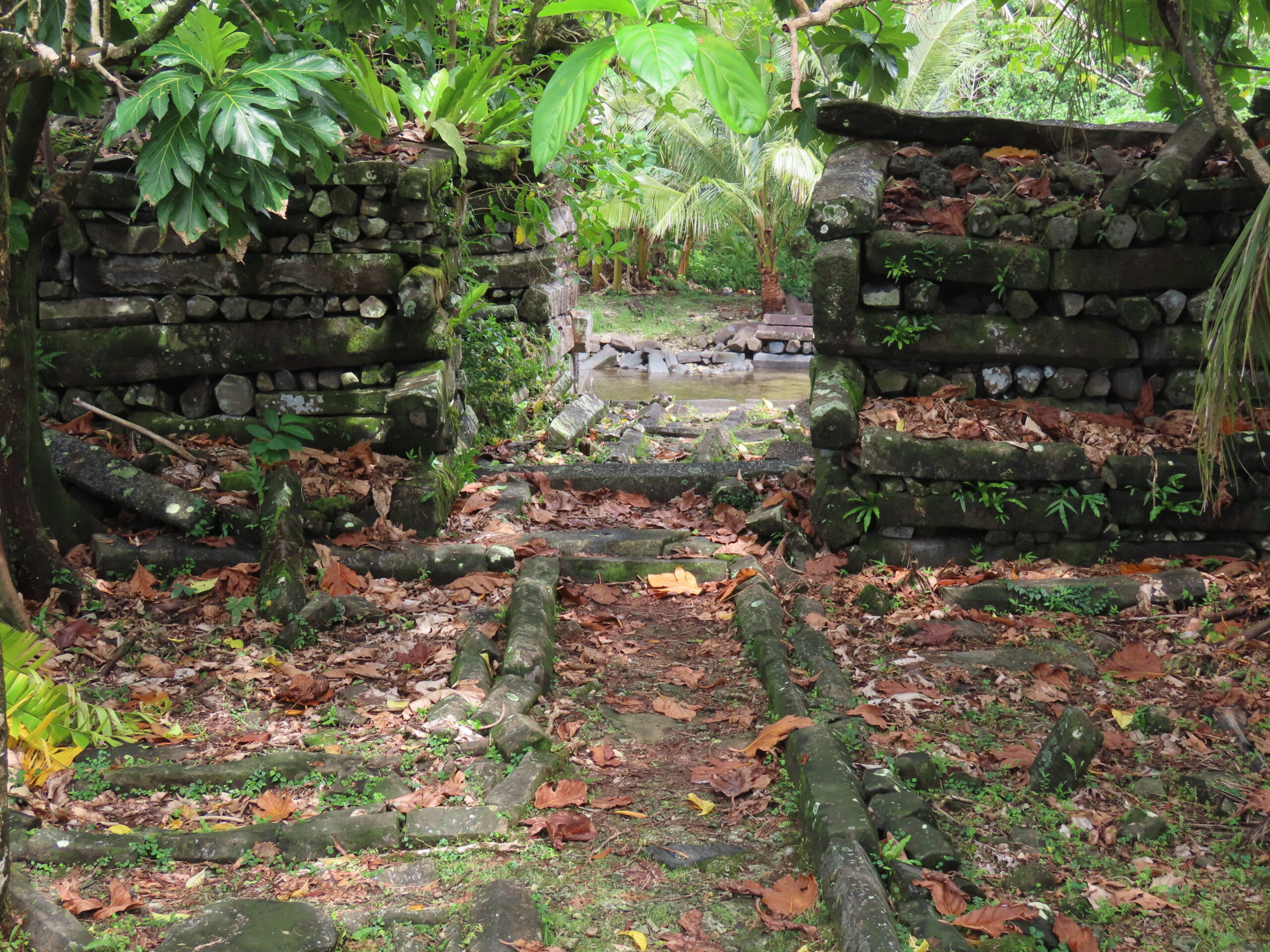
    Off the south-east coast of Pohnpei, in the Federated States of Micronesia, more than 100 artificial islets sit inside a lagoon. Between them run tidal channels. On them stand the remains of palaces, temples, tombs and houses assembled from enormous lengths of dark volcanic basalt.

    It looks less like a ruin than the abandoned set of a civilisation somebody forgot to explain.

    Except Nan Madol was real.

    UNESCO dates the great ceremonial centre of the Saudeleur dynasty principally to between 1200 and 1500. Its builders hauled columnar basalt from elsewhere on Pohnpei and stacked it in alternating courses, sometimes described as looking like giant logs laid across one another. Some individual stones weigh many tonnes.

    The engineering is impressive enough. The setting makes it ridiculous.

    The city was constructed on a coral reef.

    Within the intervals

    Nan Madol roughly means “within the intervals”, a reference to the waterways separating its islets. At high tide, the logic of the place becomes clearer: this was a city whose streets were water.

    Its most formidable surviving structure is Nandauwas, a royal mortuary complex enclosed by towering basalt walls. Elsewhere were residences for chiefs and priests, ceremonial areas and domestic spaces. Nan Madol was not an eccentric pile of stones. It was the political and religious centre of a sophisticated Pacific society.

    What survives is enough to explain why UNESCO placed it on the World Heritage List in 2016 – and simultaneously on the List of World Heritage in Danger. Mangroves, siltation, storms and collapsing masonry are slowly working on a city that has already survived centuries.

    Local oral traditions add another layer. Stories tell of supernatural power used to move the stones. Archaeology gives us human organisation, quarrying and extraordinary engineering instead, but not a neat construction manual.

    That gap between what can be seen and what can be completely explained is part of Nan Madol’s pull.

    The SideQuest

    Pohnpei is not somewhere you accidentally end up.

    Flights reach the island through the Pacific, including United’s Island Hopper connections through Honolulu and Guam and Nauru Airlines services through the region. From Pohnpei’s main settlements, Nan Madol lies on the opposite side of a mountainous, famously wet tropical island.

    The ruins are on private land but open to visitors. You can approach overland, timing the visit around the tide and expecting wet feet, slippery stone and uneven ground. Or you can do what makes far more sense for a city designed around canals and approach with a local boat or kayak guide.

    That matters because Nan Madol is not an archaeological theme park. It remains culturally significant to Pohnpeians and is connected to traditional authority that continues today. A guide is useful for more than navigation.

    From the water, the walls emerge between mangroves and the scale begins to register. Thousands of tonnes of basalt. Artificial islands. A city built into a lagoon on a remote Pacific island centuries before European contact.

    People sometimes call Nan Madol the Venice of the Pacific.

    Forget Venice.

    Venice has spent centuries explaining itself.

    Nan Madol is better because it still makes you wonder.

  • Can you really ski Mauna Kea?

    Can you really ski Mauna Kea?

    There is a point on the road up Mauna Kea where Hawaii stops behaving like Hawaii.

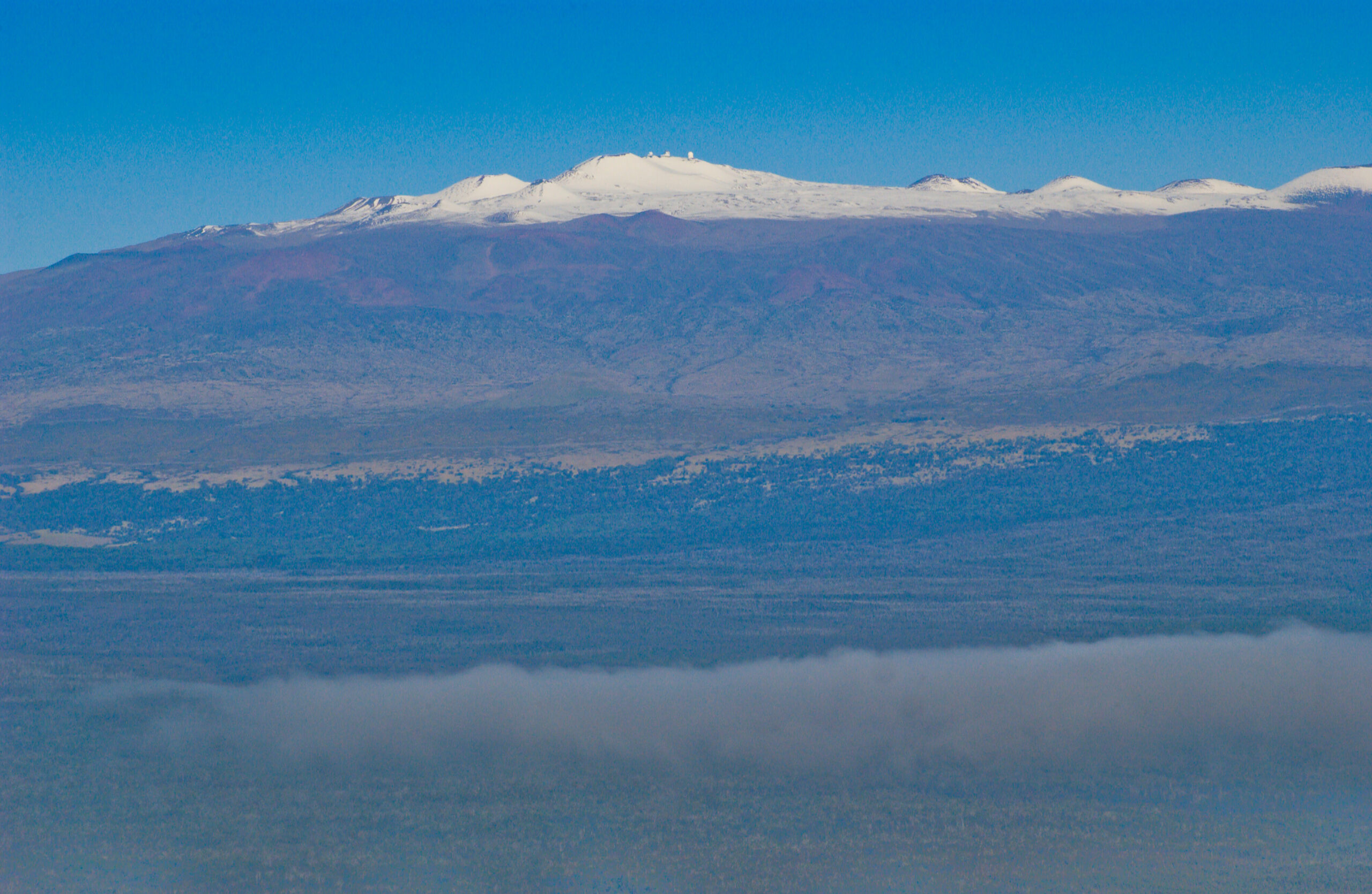
    The palms are long gone. The air thins. Black volcanic ground takes over. And, after the right winter storm, the highest mountain in the Pacific turns white.

    So yes: you can ski in Hawaii.

    But almost everything contained in the phrase “go skiing” needs to be discarded first. There is no resort on Mauna Kea. No chairlift. No piste map at the ticket window, because there is no ticket window. No ski lodge, rental shop or patrol waiting to collect you when enthusiasm exceeds ability.

    What exists is a 13,803-foot dormant volcano and, in some winters, enough snow to ski it.

    Poi Bowl

    This is not merely an internet stunt. Hawaiians have been skiing Mauna Kea for generations. University of Hawaii archives record ski clubs, a ski meet in 1967 and accounts suggesting Japanese immigrants were skiing the mountain as early as the 1930s.

    The runs even have names.

    Poi Bowl became the classic because roads reach both the top and bottom, allowing skiers to improvise a vehicle shuttle. After heavier snowfall, King Kamehameha offers a longer descent, although getting out involves hiking back to the road. Pu‘u Hau Kea has historically held snow when other slopes have melted.

    The terrain is volcanic rather than alpine: broad snowfields draped over cinder cones and lava. The snow can be deep after a storm, then rapidly become wind-scoured, icy or sun-softened. Rocks are never far away.

    And there is one more complication. Mauna Kea is sacred in Native Hawaiian culture. Current university rules allow snow recreation to be restricted or prohibited in designated areas to protect people and cultural and natural resources, and organized skiing events are prohibited. Posted closures and protected areas are not suggestions.

    The SideQuest

    The trick is not booking a ski holiday. It is being in Hawaii when the mountain decides to cooperate.

    Snow is possible in the winter months but unreliable enough that building an expensive trip around it is optimistic. When it does fall, summit access may initially close because of the same weather that created the skiing.

    If the road opens, getting above the 9,200-foot Visitor Information Station requires a proper four-wheel-drive vehicle. The Center for Maunakea Stewardship specifically warns about altitude sickness and requires 4WD above the station. Rental-car contracts are another matter entirely, and need checking before pointing anything uphill.

    Bring your own skis or snowboard. There is no mountain rental operation waiting for you. Bring someone who can drive the shuttle, too.

    Then remember what the novelty can obscure: at 13,000 feet you are skiing at an altitude higher than many famous Rocky Mountain resorts, on uncontrolled terrain, with no ski patrol.

    Which may be the best explanation for why Mauna Kea remains a SideQuest rather than a ski destination.

    On the right morning, you can make turns on a Hawaiian volcano, descend towards an ocean you can see thousands of metres below, put the skis back in the vehicle and be back among palms before dinner.

    There are better ski mountains.

    There are easier ski mountains.

    But there is only one where the answer to “Did you seriously ski in Hawaii?” can be yes.

  • The island of Revelation

    The island of Revelation

    There are easier Greek islands to reach. There are prettier ones too. But only one claims to be the place where one of history’s most mysterious books came into being.

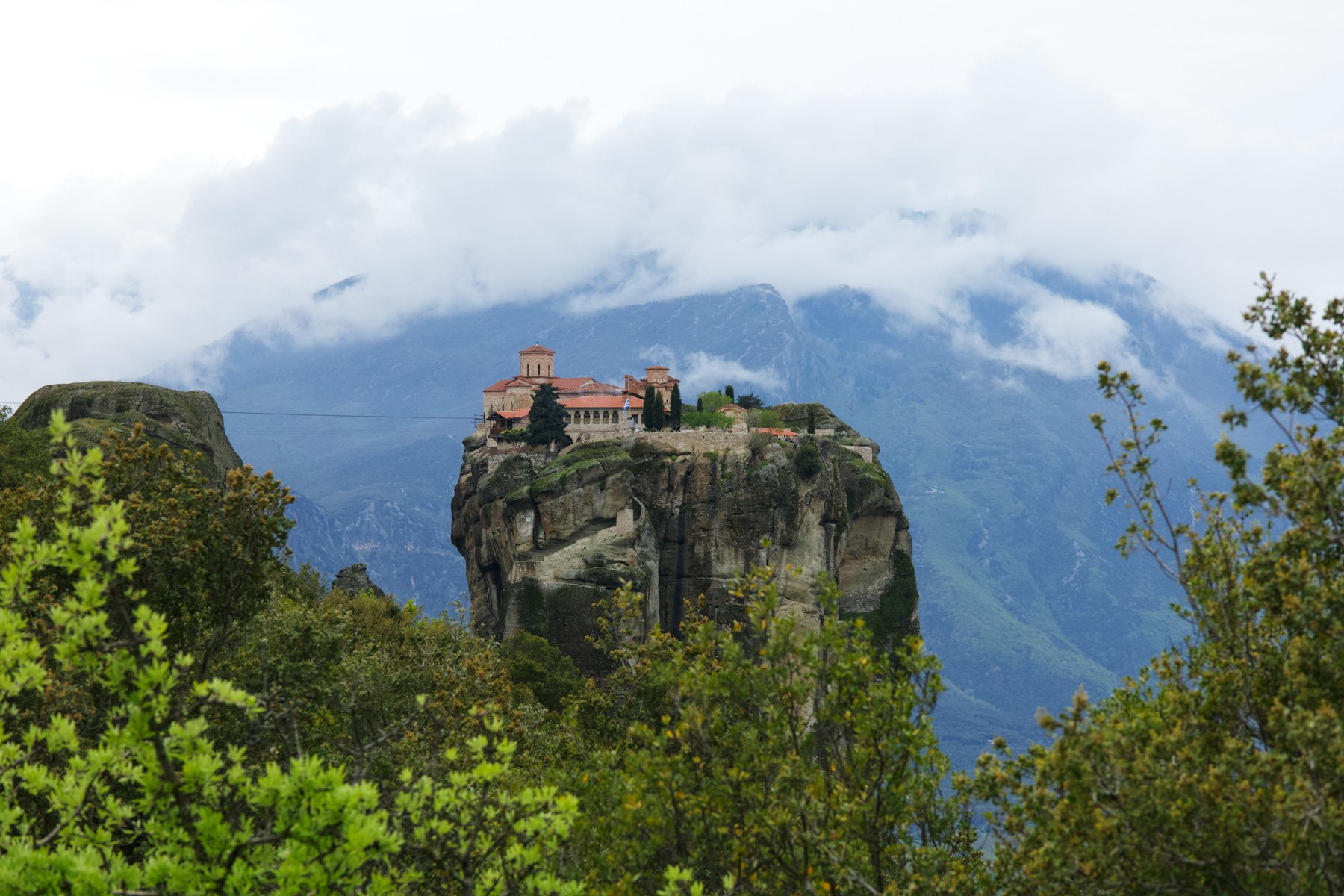
    Patmos is a rocky outcrop in the Aegean Sea, a place of whitewashed villages, hidden coves and slow ferries. Yet for almost two thousand years, travellers have crossed the Mediterranean to visit a modest cave where, according to tradition, Saint John the Divine received the visions that became the Book of Revelation.

    The locals don’t hesitate when you ask who Saint John was.

    They’ll tell you he was the very same John who appears in the Gospels alongside Matthew, Mark and Luke – the disciple who walked with Jesus through Galilee. It’s a tradition that has shaped the island for centuries. Readers can decide for themselves. If the island’s chronology is accepted, Saint John would have been an exceptionally old man by the time Revelation was written, a remarkable lifespan by any standard.

    Whatever your view, Patmos has been drawing pilgrims, historians and curious travellers ever since.

    High above the harbour stands the imposing Monastery of Saint John the Theologian, a fortress-like complex that has watched over the island for more than 900 years. Beneath it lies the Cave of the Apocalypse, a surprisingly small chapel built around the grotto where tradition says the visions were received and dictated to John’s disciple, Prochorus.

    The Beast

    Stepping inside the cave is unexpectedly moving.

    The glare of the Greek sun disappears behind thick stone walls. The air becomes cooler. Beeswax candles flicker quietly in front of ancient icons. The scent of incense hangs in the stillness, while polished stone underfoot reminds you that countless pilgrims have stood in exactly the same place.

    People lower their voices without being asked.

    Some pray.

    Others simply stand.

    Whatever your beliefs, there is something strangely humbling about occupying a space that has shaped the imagination of so many generations.

    This is where Christians believe Saint John described the Beast, the Dragon, the Four Horsemen and the New Jerusalem. Those visions have echoed through art, literature and popular culture for nearly two thousand years.

    The SideQuest

    Reaching Patmos is part of the experience.

    There is no international airport. Most visitors first make their way to Athens before boarding a ferry through the Dodecanese. The journey is slow enough that modern life begins to recede long before the island comes into view.

    As the ferry approaches, the monastery slowly rises above the hills, dominating the skyline exactly as it has for centuries. You begin to understand why pilgrims still describe arriving by sea as part of the experience.

    Your friend may tell you Patmos is moving.

    Mine did.

    I dismissed that as the sort of thing people say after visiting famous places.

    Then I read what countless travellers have written after standing inside the cave.

    They all seem to struggle to describe exactly why.

    Perhaps it’s because Patmos asks nothing of you except your attention.

    There are no queues urging you forward. No dramatic soundtrack. No theatrical lighting. Just silence, stone, incense and the knowledge that, whether by faith, history or tradition, you are standing in one of the most influential places in Western civilisation.

    Some destinations leave you with photographs.

    Patmos leaves you with questions.

    And those are often the journeys you remember longest.