There are easier Greek islands to reach. There are prettier ones too. But only one claims to be the place where one of history’s most mysterious books came into being.
Patmos is a rocky outcrop in the Aegean Sea, a place of whitewashed villages, hidden coves and slow ferries. Yet for almost two thousand years, travellers have crossed the Mediterranean to visit a modest cave where, according to tradition, Saint John the Divine received the visions that became the Book of Revelation.
The locals don’t hesitate when you ask who Saint John was.
They’ll tell you he was the very same John who appears in the Gospels alongside Matthew, Mark and Luke – the disciple who walked with Jesus through Galilee. It’s a tradition that has shaped the island for centuries. Readers can decide for themselves. If the island’s chronology is accepted, Saint John would have been an exceptionally old man by the time Revelation was written, a remarkable lifespan by any standard.
Whatever your view, Patmos has been drawing pilgrims, historians and curious travellers ever since.
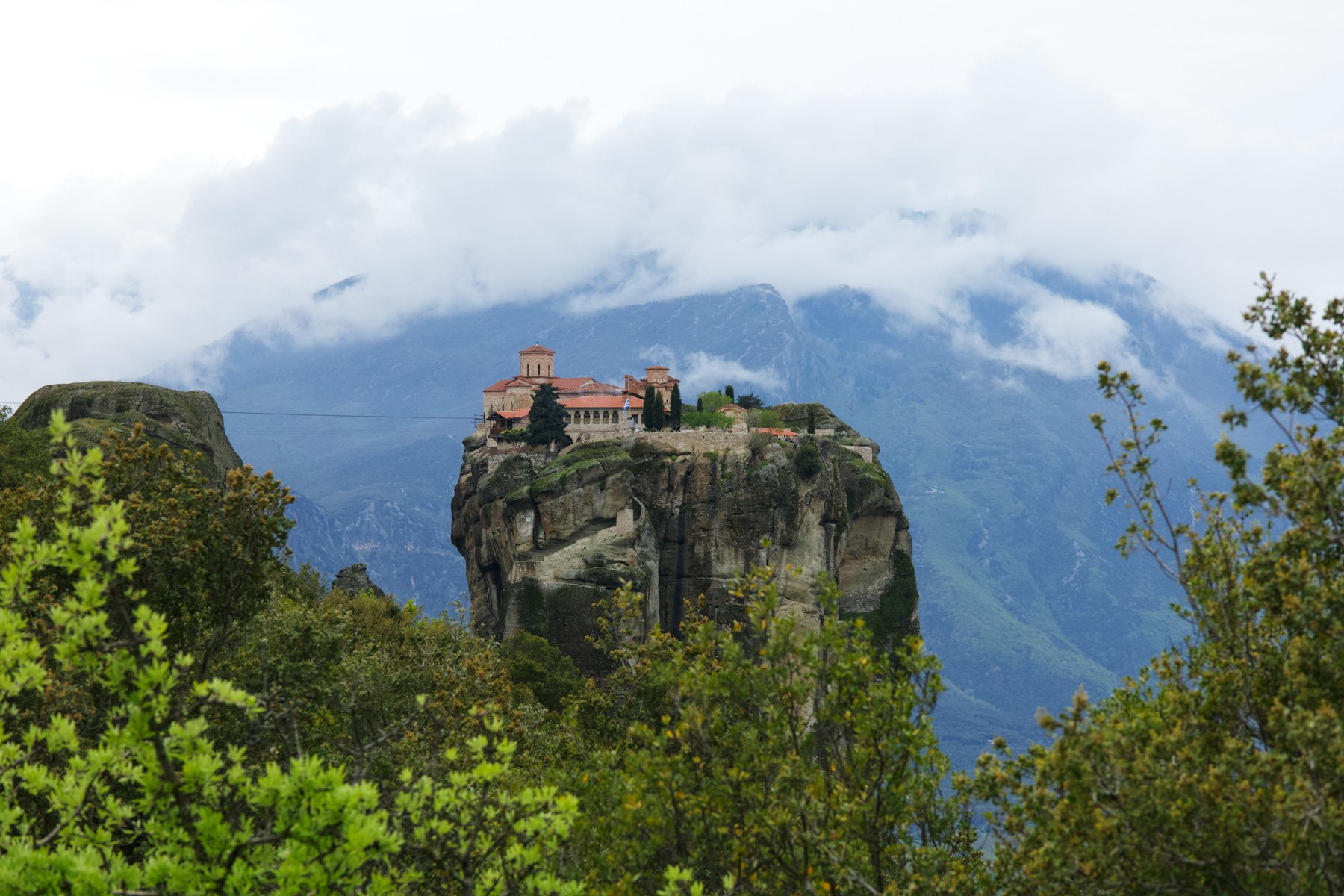
High above the harbour stands the imposing Monastery of Saint John the Theologian, a fortress-like complex that has watched over the island for more than 900 years. Beneath it lies the Cave of the Apocalypse, a surprisingly small chapel built around the grotto where tradition says the visions were received and dictated to John’s disciple, Prochorus.
The Beast
Stepping inside the cave is unexpectedly moving.
The glare of the Greek sun disappears behind thick stone walls. The air becomes cooler. Beeswax candles flicker quietly in front of ancient icons. The scent of incense hangs in the stillness, while polished stone underfoot reminds you that countless pilgrims have stood in exactly the same place.
People lower their voices without being asked.
Some pray.
Others simply stand.
Whatever your beliefs, there is something strangely humbling about occupying a space that has shaped the imagination of so many generations.
This is where Christians believe Saint John described the Beast, the Dragon, the Four Horsemen and the New Jerusalem. Those visions have echoed through art, literature and popular culture for nearly two thousand years.
The SideQuest
Reaching Patmos is part of the experience.
There is no international airport. Most visitors first make their way to Athens before boarding a ferry through the Dodecanese. The journey is slow enough that modern life begins to recede long before the island comes into view.
As the ferry approaches, the monastery slowly rises above the hills, dominating the skyline exactly as it has for centuries. You begin to understand why pilgrims still describe arriving by sea as part of the experience.
Your friend may tell you Patmos is moving.
Mine did.
I dismissed that as the sort of thing people say after visiting famous places.
Then I read what countless travellers have written after standing inside the cave.
They all seem to struggle to describe exactly why.
Perhaps it’s because Patmos asks nothing of you except your attention.
There are no queues urging you forward. No dramatic soundtrack. No theatrical lighting. Just silence, stone, incense and the knowledge that, whether by faith, history or tradition, you are standing in one of the most influential places in Western civilisation.
Some destinations leave you with photographs.
Patmos leaves you with questions.
And those are often the journeys you remember longest.