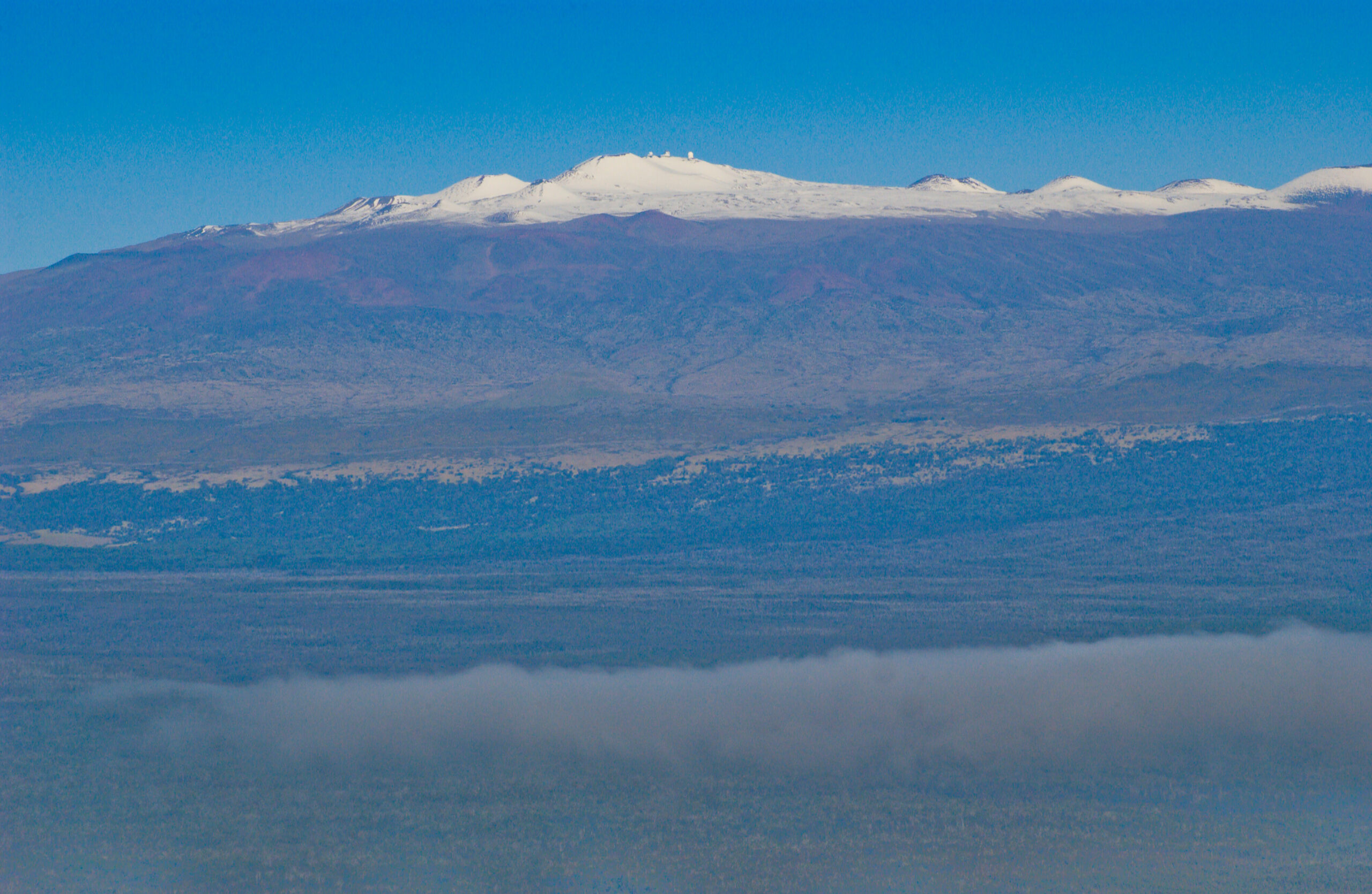
There is a point on the road up Mauna Kea where Hawaii stops behaving like Hawaii.
The palms are long gone. The air thins. Black volcanic ground takes over. And, after the right winter storm, the highest mountain in the Pacific turns white.
So yes: you can ski in Hawaii.
But almost everything contained in the phrase “go skiing” needs to be discarded first. There is no resort on Mauna Kea. No chairlift. No piste map at the ticket window, because there is no ticket window. No ski lodge, rental shop or patrol waiting to collect you when enthusiasm exceeds ability.
What exists is a 13,803-foot dormant volcano and, in some winters, enough snow to ski it.
Poi Bowl
This is not merely an internet stunt. Hawaiians have been skiing Mauna Kea for generations. University of Hawaii archives record ski clubs, a ski meet in 1967 and accounts suggesting Japanese immigrants were skiing the mountain as early as the 1930s.
The runs even have names.
Poi Bowl became the classic because roads reach both the top and bottom, allowing skiers to improvise a vehicle shuttle. After heavier snowfall, King Kamehameha offers a longer descent, although getting out involves hiking back to the road. Pu‘u Hau Kea has historically held snow when other slopes have melted.
The terrain is volcanic rather than alpine: broad snowfields draped over cinder cones and lava. The snow can be deep after a storm, then rapidly become wind-scoured, icy or sun-softened. Rocks are never far away.
And there is one more complication. Mauna Kea is sacred in Native Hawaiian culture. Current university rules allow snow recreation to be restricted or prohibited in designated areas to protect people and cultural and natural resources, and organized skiing events are prohibited. Posted closures and protected areas are not suggestions.
The SideQuest
The trick is not booking a ski holiday. It is being in Hawaii when the mountain decides to cooperate.
Snow is possible in the winter months but unreliable enough that building an expensive trip around it is optimistic. When it does fall, summit access may initially close because of the same weather that created the skiing.
If the road opens, getting above the 9,200-foot Visitor Information Station requires a proper four-wheel-drive vehicle. The Center for Maunakea Stewardship specifically warns about altitude sickness and requires 4WD above the station. Rental-car contracts are another matter entirely, and need checking before pointing anything uphill.
Bring your own skis or snowboard. There is no mountain rental operation waiting for you. Bring someone who can drive the shuttle, too.
Then remember what the novelty can obscure: at 13,000 feet you are skiing at an altitude higher than many famous Rocky Mountain resorts, on uncontrolled terrain, with no ski patrol.
Which may be the best explanation for why Mauna Kea remains a SideQuest rather than a ski destination.
On the right morning, you can make turns on a Hawaiian volcano, descend towards an ocean you can see thousands of metres below, put the skis back in the vehicle and be back among palms before dinner.
There are better ski mountains.
There are easier ski mountains.
But there is only one where the answer to “Did you seriously ski in Hawaii?” can be yes.